Enterprise Data Center Engineering, Security & GCC Strategy
Complete technical & strategic blueprint covering Data Center classifications, deep industry mapping, core hardware & cooling stacks, Uptime Tiers I–IV, Step-by-Step Construction Lifecycle, Physical & Cloud Security, 24/7 Maintenance & Support SLA, Private vs. Cloud, and BluePi Solutions' GCC Service Portfolio & GTM Strategy.
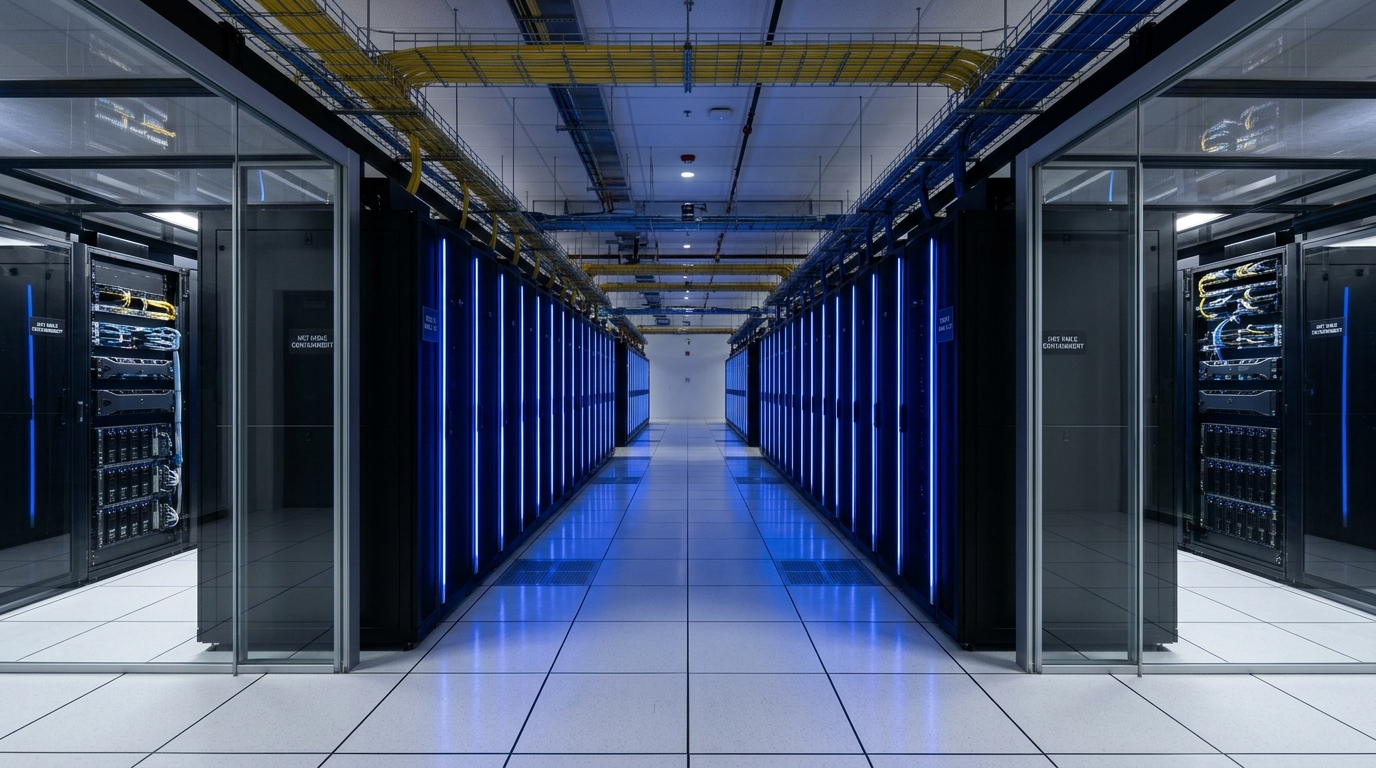
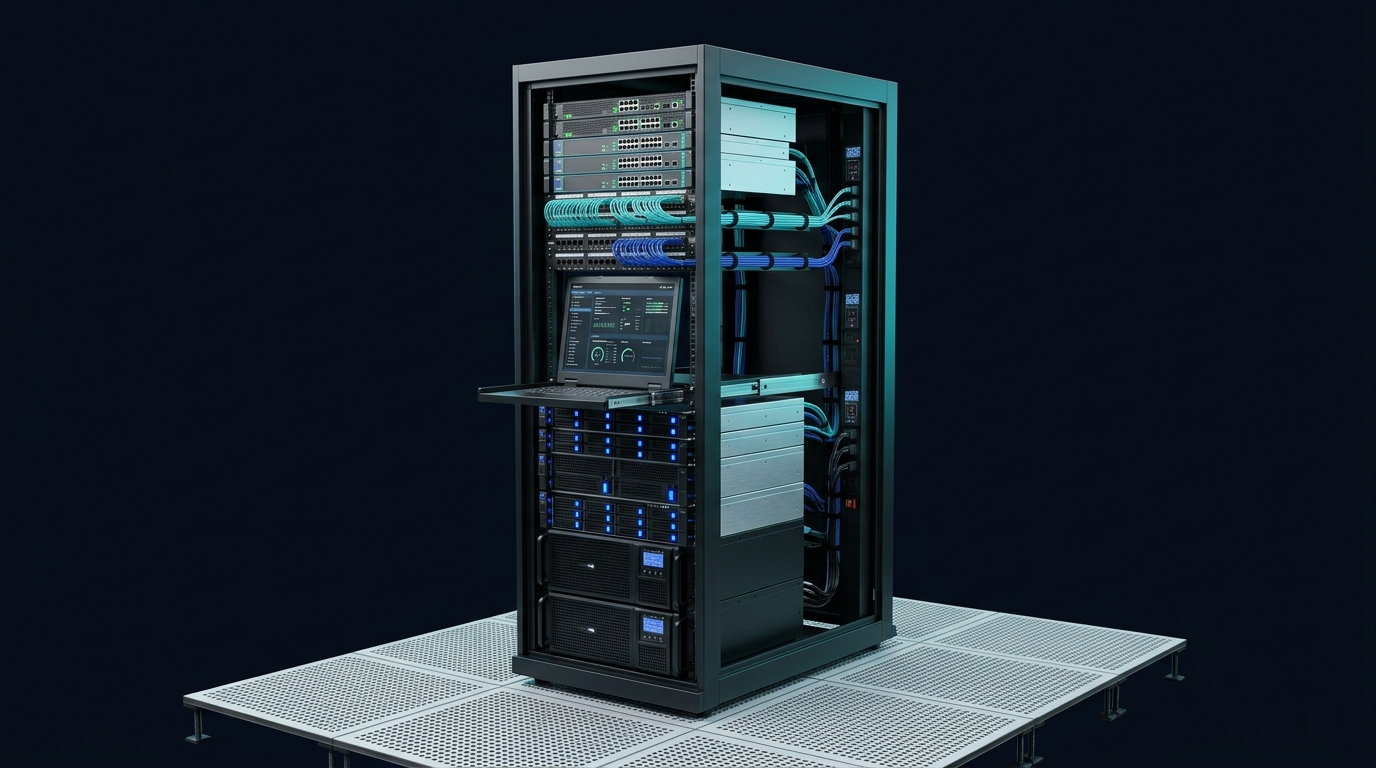
Verified Rack Weight, Power & Thermal Physics FS800 & 20kVA Verified
| U-Slot | Exact Hardware Model & Qty | Typ / Peak W | Subsystem Role, Ports & Redundancy Spec |
|---|---|---|---|
| U41–U42 | 2× FortiSwitch FS-108F WAN Switches (2U) | 40W / 48W | Dual ISP fiber demarcation splitting ISP-A & ISP-B into both NGFWs |
| U39–U40 | 2× FortiGate FG-201G NGFW HA Pair (2U) | 104W / 228W | Active-Passive Perimeter Defense (<3s RTO, 3-Yr FortiGuard UTP, IPS, SSL) |
| U37–U38 | 2× Cisco Catalyst C9300X-24Y-M Core (2U) | 300W / 700W | 24× 25G/10G SFP28 Core Stack (StackWise-1T 1Tbps + StackPower) |
| U35–U36 | 2× Cisco Catalyst C9300X-12Y-M Server (2U) | 240W / 700W | 12× 25G/10G SFP28 Server Farm Stack (LACP dual-homed to all hosts) |
| U34 | 1× FortiSwitch FS-124F OOB Switch (1U) | 25W / 30W | Air-gapped Out-of-Band mgmt network (iLO 7, Alletra SAN, KVM, PDU, UPS) |
| U31–U33 | 3× Cisco Catalyst C9200L-24PXG PoE+ (3U) | 430W / 1,350W | 72× PoE+ mGig ports + 10G SFP+ uplinks for 70 users, Wi-Fi & IP phones |
| U26–U30 | OM4 Fiber LIU + Cat6A Patch + 1U Blank (5U) | 0W (Passive) | 4U Structured cabling field (26× OM4 LC + Cat6A STP) + U30 thermal blank |
| U24–U25 | 1× Yeastar P560 IP-PBX + 1U Blank (2U) | 25W / 45W | Corporate voice controller (E1 PRI / SIP trunk for 70 Yealink IP phones) |
| U20–U23 | ATEN CL3708NX 18.5" LCD KVM + Buffers (4U) | 25W / 35W | 8-Port slide-out Full-HD KVM crash-cart (U21) + 3U thermal/cable buffers |
| U16–U19 | 2× HPE ProLiant DL380 Gen12 Hosts (4U) | 840W / 1,600W | Host 1 & 2: 2× Xeon 6730P (64C), 512GB DDR5, 2× 32Gb FC, 4× 10G SFP+ |
| U14–U15 | 1× HPE ProLiant DL380 Gen12 Backup (2U) | 280W / 800W | Physical Veeam Host: Xeon 6515P, 6× 12TB SAS (72TB Raw / ~48TB RAID-6) |
| U12–U13 | 1× HPE Alletra MP B10100 All-NVMe SAN (2U) | 450W / 900W | Dual Active-Active Nodes, 12× 1.92TB NVMe (15TB licensed), 32Gb FC MPIO |
| U1–U11 | APC 20kVA UPS (7U) + 192V Battery (4U) (11U) | 20kW Cap. | SRTG20KXLI (142.5kg) + SRTG192XLBP2 (116kg) + Rear 0U Dual ATEN PDUs |
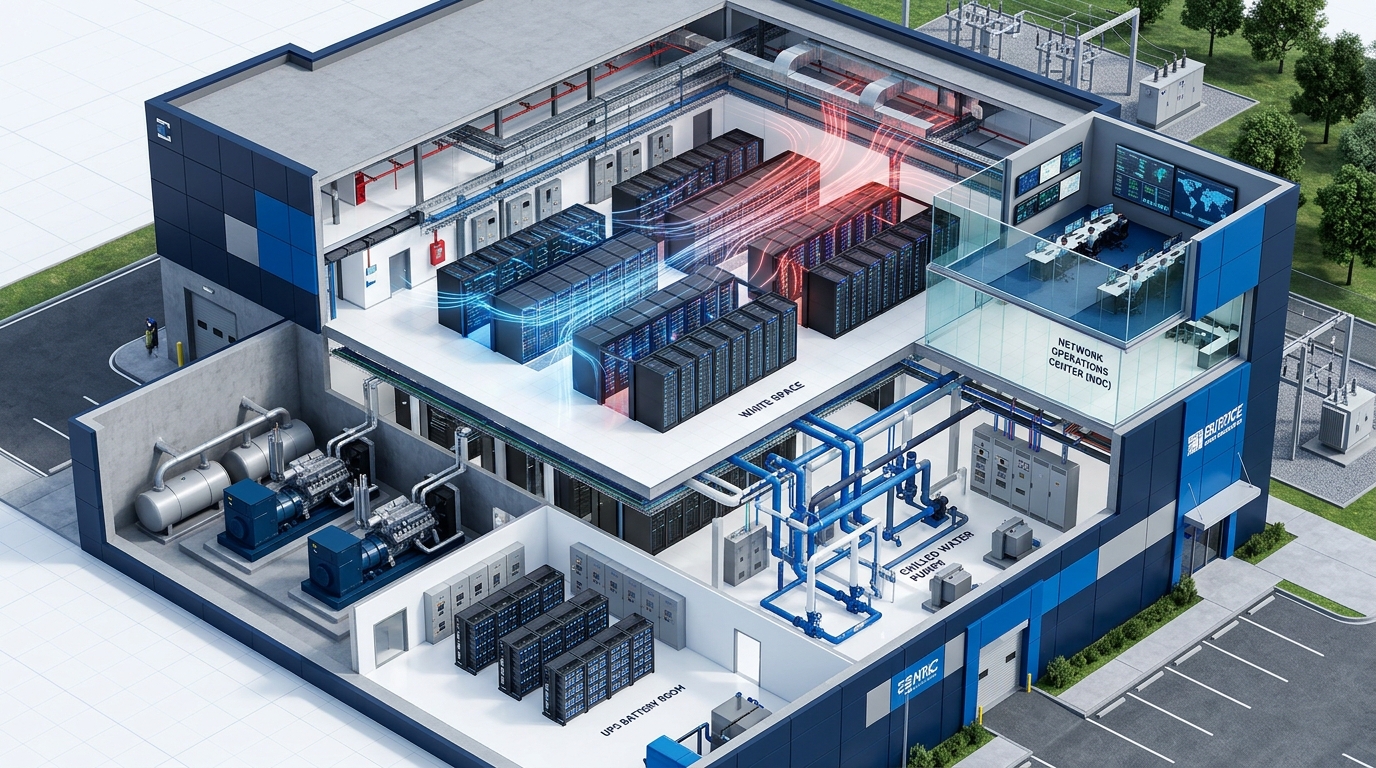
3-Layer Vertical Room Structure (16×17 ft / Enterprise Hall)
Ceiling → FloorPhysical Structure of a 42U Rack Cabinet (600×1070mm Frame Anatomy)
10 Structural PartsBeyond the servers and switches (covered in Slide 8), the physical 42U Server Rack Enclosure itself consists of 10 engineered structural subsystems:

16-Week Fast-Track Implementation Gantt (Mini/Enterprise DC) Turnkey Schedule
The 7 Sequential Steps to Create a Production Data Center
End-to-End Blueprint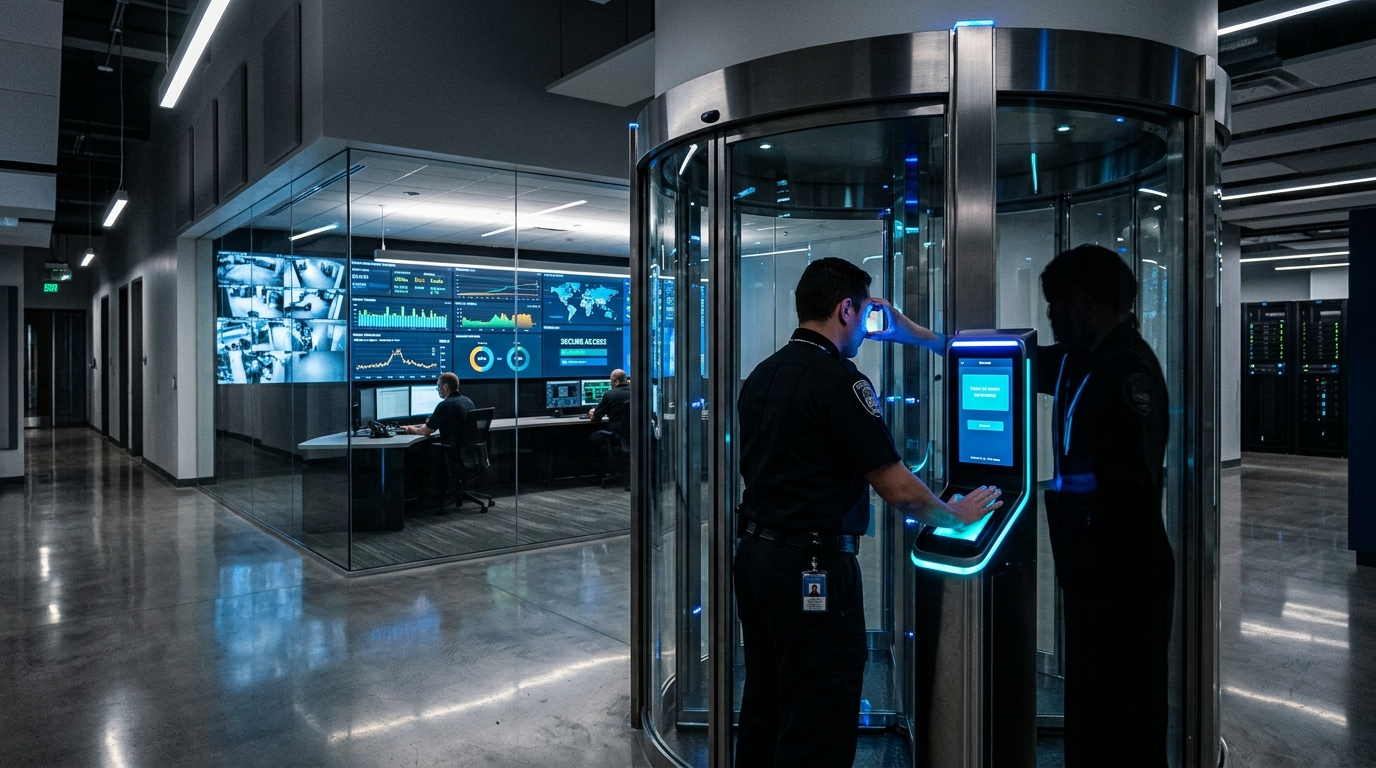
Fire & Environmental Safety Systems Zero Water Damage
- VESDA (Very Early Smoke Detection Apparatus): Laser air-sampling sensors detect microscopic incipient smoke particles minutes before visible flame.
- Clean Agent Gas Suppression (FM-200 / Novec 1230 / Inergen): Total flooding gas extinguishes fire in <10s by interrupting combustion with zero water or residue damage to servers.
- FACP & EPO Interlock: Interlocked with Building Fire Alarm Control Panel, HVAC damper shutoff (to contain gas), and guarded Emergency Power Off (EPO) button.
- Under-Floor Leak & Seismic Protection: Hydro-sensing cables under raised floor detect condenser drips; seismic rack anchoring protects against tremors.
The 6 Concentric Rings of Data Center Physical Security
ISO 27001 / NCA / SAMA Physical Controls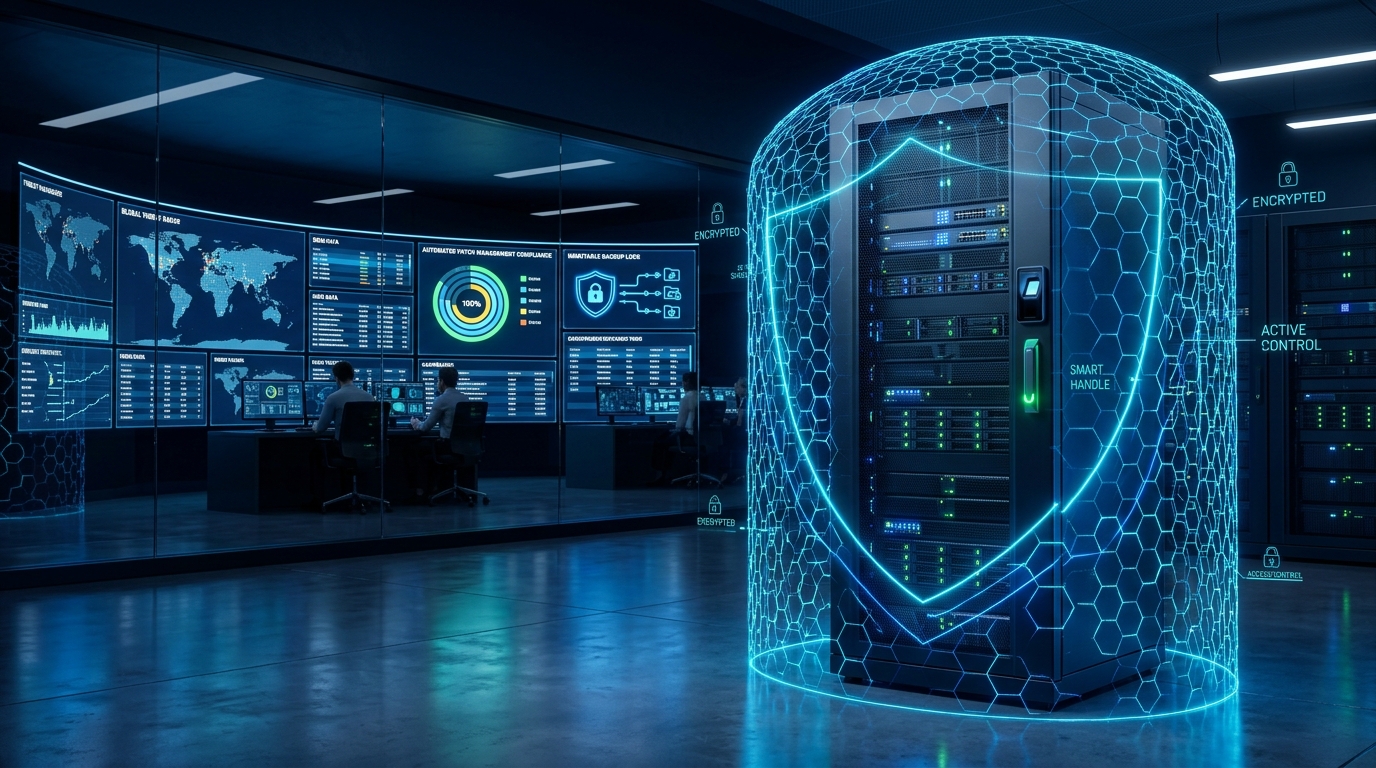
Exact Security Devices Installed in the Data Center 12 Defense Appliances
How Security is Maintained — 5-Stage Operational Cadence
Continuous SecOps SOP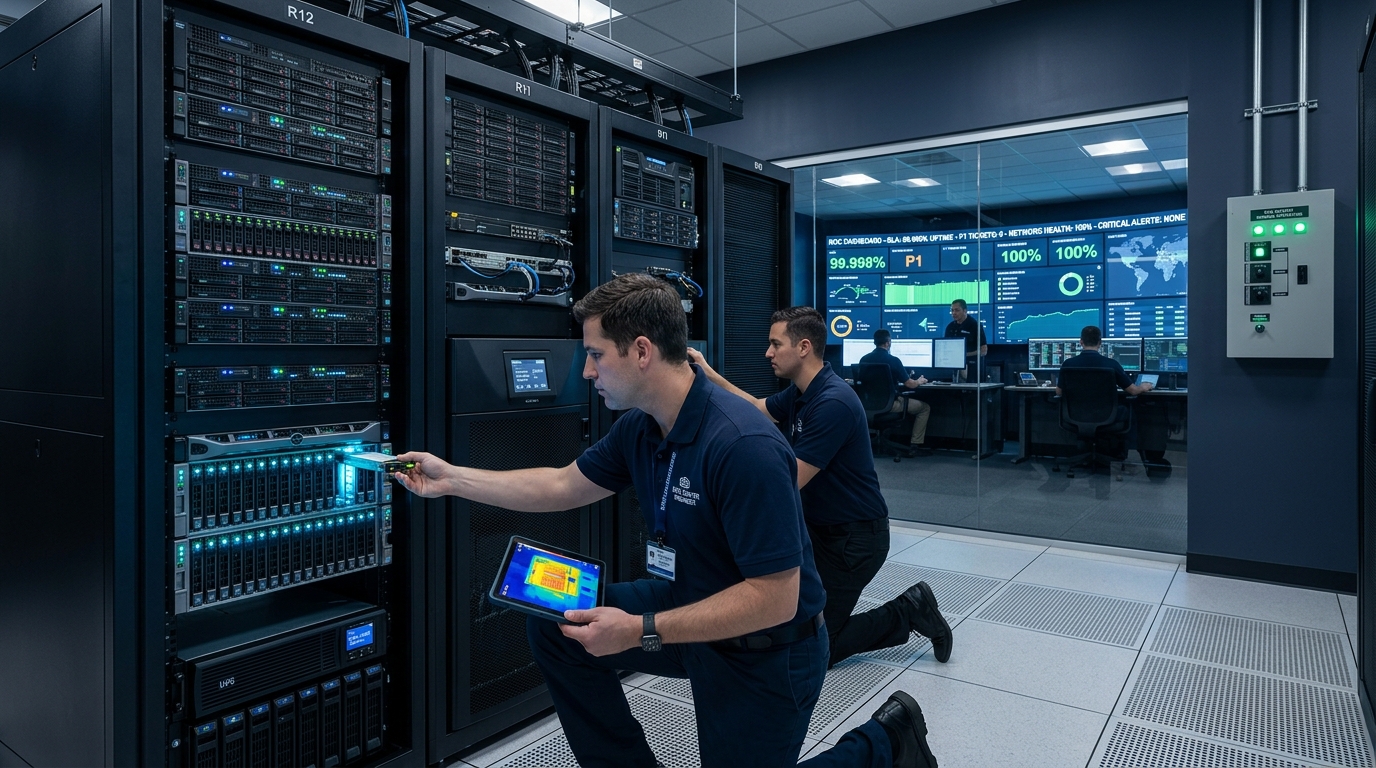
Multi-Year OEM Warranty & Support Coverage
Tier-1 Vendor BackedZero-Downtime Maintenance Pillars (Facility, Hardware & Software)
Concurrent Maintenance| SLA Severity Tier | Incident Scope / Trigger | Response & Escalation | Resolution & Support Path |
|---|---|---|---|
| P1 // CRITICAL | Production down, SAN outage, power/cooling failure, active breach | < 15 Mins (24/7 NOC L1/L2) + Instant L3 Architect alert | < 2–4 Hrs On-Site Engineer & OEM Priority RMA; 99.9% SLA |
| P2 // HIGH | Single HA node/firewall/PDU failure (cluster running degraded) | < 30 Mins Remote OOB (iLO 7 / VPN) diagnostics | < 4–8 Hrs Hot-swap part replacement; zero business stop |
| P3 // MEDIUM | Non-critical VM issue, backup warning, minor switch port fault | < 2 Hours (L2 System / Network Engineer) | < 24 Hours Remote remediation or next-business-day visit |
| P4 // PREVENTIVE | Scheduled AMC audit, firmware upgrade, new VLAN/VM request, UAT | < 8 Hours Change Advisory Board (CAB) approval | Planned window + 8-Point Failover Drill & Admin Training |
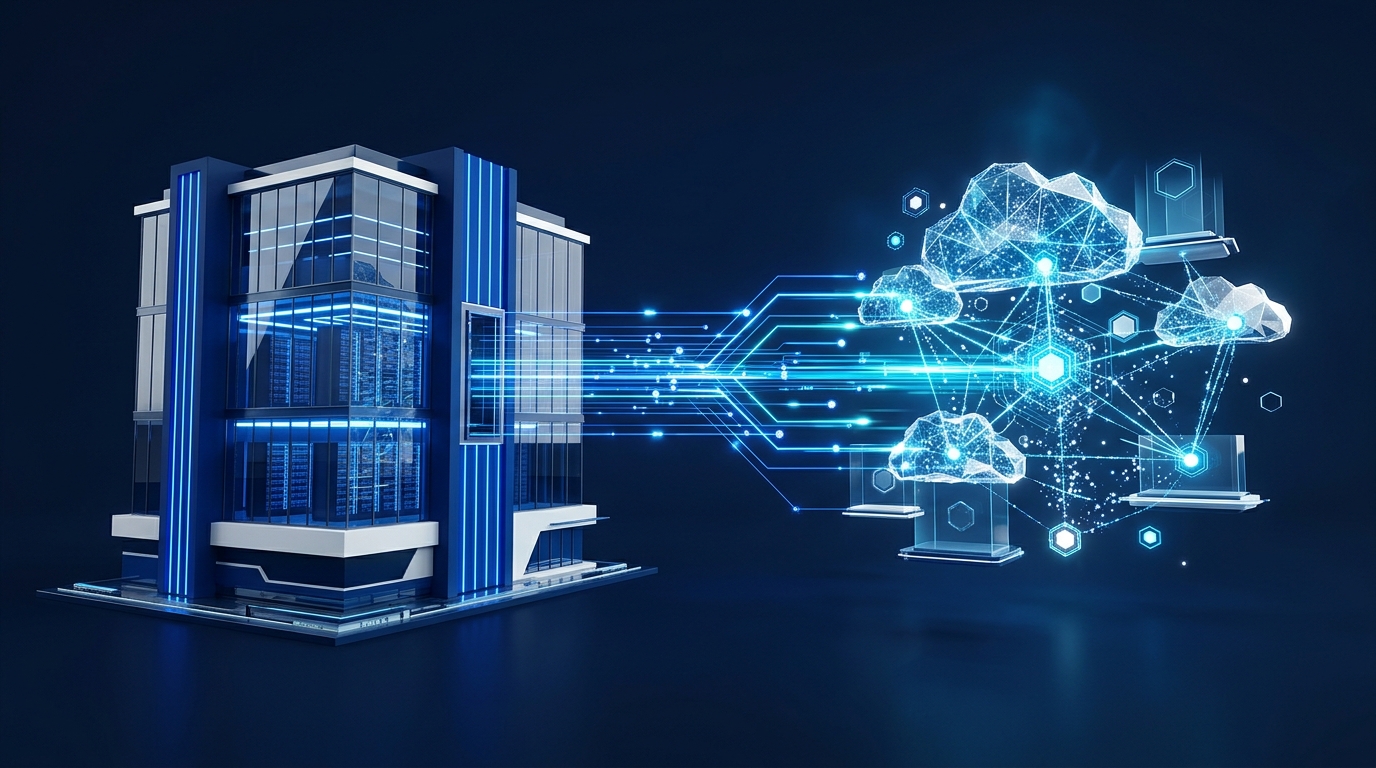
The 3-Year TCO Crossover Rule Financial Reality
Public Cloud excels for spiky or experimental workloads. However, for steady 24/7 enterprise workloads (10–200 VMs, high database IOPS, heavy bandwidth), an On-Premise Mini/Core Data Center typically pays for itself in 18–26 months and saves 40%–55% over 5 years.
| Comparison Dimension | Private Data Center (On-Prem / Colo) | Public Cloud (AWS / Azure / GCP) |
|---|---|---|
| 1. Financial Model | CapEx Investment Fixed hardware asset amortized over 5–7 years; minimal monthly recurring cost. | OpEx Subscription Zero upfront CapEx; perpetual monthly billing that scales with usage. |
| 2. Provisioning Speed | 4 to 16 Weeks for initial turnkey build; minutes to spin up new VMs once built. | Minutes to deploy new cloud VMs or managed databases via console/Terraform. |
| 3. Data Sovereignty | 100% Physical Sovereignty — You control the room, keys, and NVMe drives in-country. | Data sits in shared hyperscaler halls; subject to foreign cloud jurisdiction laws. |
| 4. Scalability | Scale-up by populating free rack units (e.g., 5U buffer) or adding expansion racks/nodes. | Instant Elastic Auto-Scaling across thousands of instances globally. |
| 5. Latency & Egress Fees | <0.5 ms Local 10G/25G LAN; $0 data egress fees for internal file/DB transfers. | Internet/WAN latency (10–60ms); expensive per-GB egress charges when downloading data. |
| 6. Storage & IOPS Cost | All-NVMe 32Gb FC SAN delivers hundreds of thousands of IOPS at zero extra monthly fee. | Provisioned High-IOPS Cloud Block Storage (io2/Ultra Disk) is extremely costly per month. |
| 7. Accountability | Dedicated turnkey integrator (BluePi Solutions) + internal IT control. | Self-service shared responsibility; enterprise support tiers cost 3%–10% extra of cloud bill. |
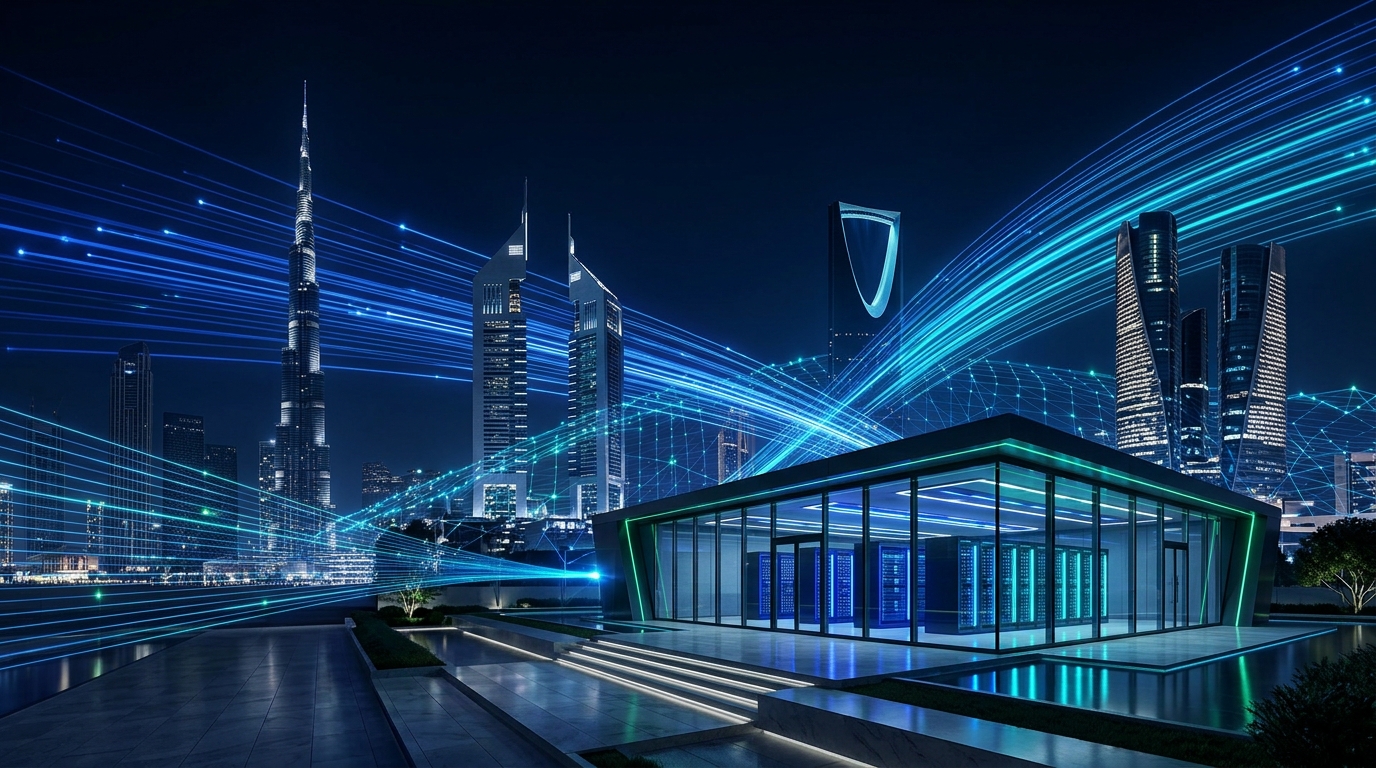
Why GCC Enterprises Choose BluePi Solutions Single Accountable Partner
Headquartered in Covent Garden, London (UK) under The Integrity Consortium Ltd, BluePi eliminates fragmented vendor finger-pointing by taking single-point turnkey responsibility from raised floor & cooling to SAN, firewall HA, and UAT sign-off.
On-Premise Mini & Enterprise DC
Complete design & build of 1-rack (42U) to 50-rack server rooms: FS800 antistatic raised floor, entrance ramps, 25kW+ InRow precision cooling (high-ambient 50°C Gulf condensers), and FM-200 / Novec 1230 fire suppression.
Power Engineering & UPS Autonomy
HPE/Schneider electrical load studies, APC Smart-UPS RT (20kVA–500kVA) online double-conversion deployment, IEEE 1188 battery aging calculations, dual 16A/32A Smart Eco PDUs, and Generator/ATS integration.
Virtualization & All-NVMe SAN
Turnkey clustering of HPE ProLiant DL380 Gen12 hosts and HPE Alletra Storage MP All-NVMe SAN over dual-fabric 32Gb/64Gb Fibre Channel with Windows Server Datacenter Hyper-V or VMware vSphere HA.
GCC Colocation & Hybrid Cloud
Cage architecture, rack-and-stack, and zero-downtime migration into Equinix Dubai/Abu Dhabi, Khazna, Moro Hub, Center3 (KSA), and Meeza (Qatar) + hybrid ExpressRoute/Direct Connect to AWS/Azure ME regions.
3-2-1 Veeam Immutable DR
Dedicated physical backup servers (RAID-6 repositories) paired with Veeam Universal Licensing and off-site S3 Object Lock WORM immutability, plus quarterly automated DR failover drills.
24/7 NOC, OOB & Annual AMC
Dedicated Out-of-Band (iLO 7, ATEN LCD KVM-over-IP) management networks, 24/7 proactive telemetry monitoring, firmware lifecycle patching, and SLA-backed Annual Maintenance Contracts (AMC).
UK Engineering Pedigree + "Turnkey in 16 Weeks"
- Brand Hook: Position BluePi Solutions (UK) Ltd as a British-engineered turnkey specialist—avoiding Big-4 consulting markups while beating local box-droppers on engineering rigor.
- Hero Productized Offer: Market the "Turnkey 42U High-Availability Corporate Mini Data Center" (fixed scope, 16-week delivery, 99.9% SLA) to GCC companies with 50–500 staff.
- Sovereignty Angle: Target firms forced by Saudi PDPL, SAMA, and UAE data laws to keep data in-country rather than on foreign public clouds.
MEP Fit-Out, Distributor & Colo Alliances
- Commercial Interior & MEP Partners: Partner with Dubai/Riyadh office fit-out and civil contractors—every time a company builds a new HQ floor, BluePi is brought in as the specialist Server Room / Mini-DC subcontractor.
- Vendor & Distributor Co-Selling: Register deal protection with HPE, Schneider APC, Cisco, Fortinet & Veeam via Gulf distributors (Redington Gulf, Mindware, Logicom) to receive vendor-referred leads.
- Local Presence / JV: Leverage UAE Free Zone (DMCC/DIFC) & KSA MISA/local partner registration for government & semi-govt tenders (Etimad / Tejari).
ABM, Technical Lead Magnets & SEO
- LinkedIn Account-Based Marketing (ABM): Direct executive outreach to CTOs, IT Heads, CISOs, and COOs in Banking, Healthcare, EPC, Logistics, and Real Estate across Riyadh & Dubai.
- High-Value Free Diagnostics (Lead Magnets): Offer a free "Data Center Gap & UPS Battery Aging Audit" or "Cloud Repatriation & 3-2-1 Ransomware Readiness Assessment" to get inside client server rooms.
- Proof-Driven Content & SEO: Publish real rack elevation blueprints, thermal calculations, and bilingual (English/Arabic) landing pages targeting high-intent GCC search terms.
Flagship GCC Events & Land-and-Expand
- Flagship Tech Summits: Host private C-level roundtables & bilateral meetings during GITEX Global (Dubai), LEAP (Riyadh), Black Hat MEA (Riyadh), and COMEX (Muscat).
- Land-and-Expand Funnel:
1) Land: Security/Gap Audit or FortiGate/Veeam upgrade ($15k–$40k)
2) Expand: Turnkey 42U Mini Data Center or Colo Migration ($150k–$500k+)
3) Retain: 3-Year Managed NOC, SOC & Preventative AMC recurring revenue.